Bayer Makrolon Polycarbonate materials have a unique balance of helpful features which include temp resistance, impact resistance and optical properties position polycarbonates between commodity plastics and engineering plastics.
Polycarbonate is a very long-lasting material. Even though it features considerable impact-resistance, it's got reduced scratch-resistance and so a hard coating may be applied to polycarbonate eye protection as well as polycarbonate exterior automobile equipment. The characteristics of polycarbonate tend to be similar to those of Acrylic PMMA materials, except polycarbonate is definitely stronger, it is usable in a wider temperature range and is a bit more expensive. This plastic polymer is highly transparent to visible light and it has better light transmission characteristics than several types of glass.
Polycarbonate has a glass transition temperature of approximately 150 °C (302 °F), as a result it softens gradually above this point and flows above about 300°C (572 °F). Tools need to be held at warm to high temperatures, generally above 80 °C (176 °F) to make strain- and almost stress free products.
Unlike many thermoplastics, polycarbonate can undergo large deformations without breaking. Hence, it is sometimes processed and formed cold using standard sheet metal techniques, such as forming bends on a brake. Even for sharp angle bends with a tight radius, no heating is usually necessary. This makes it useful for prototyping applications where transparent or electrically non-conductive parts are important, which should not be produced from sheet metal. Note that PMMA/Plexiglas, which happens to be similar in looks to polycarbonate, but is brittle and cannot be bent at room temperature.
The light weight of polycarbonate, as opposed to glass, has led to growth and development of electronic display screens that replace glass with polycarbonate, for use in mobile and portable devices. Such displays include newer e-ink and many LCD screens, though CRT, plasma screen and other LCD technologies generally still require glass for its higher melting temperature and its ability to be etched in finer detail.
Other kinds of items made from Polycarbonate include durable, lightweight luggage, MP3/digital audio player cases, computer cases, riot shields, instrument panels, and common style blender jars. Many toys and hobby products are made of polycarbonate parts, e.g. fins, gyro mounts, and flybar locks for use with radio-controlled helicopters.
For use in applications exposed to weathering or UV-radiation, a special surface treatment maybe needed. This can be a coating (e.g. for improved abrasion resistance), or as a coextrusion for enhanced weathering resistance.
The Makrolon Polycarbonate is a thermoplastic that at the beginning, starts as a solid plastic material in the form of small pellets. In a manufacturing process called injection molding, the pelletized resin is heated until they melt and become a very thick liquid. This liquid polycarbonate is then rapidly pushed into the mold - shaped like the part, compressed under high pressure and cooled to produce a finished product in less than a minute.
Wednesday, April 14, 2021
Bayer Makrolon Polycarbonate Sheet offer high impact strength

Wednesday, March 24, 2021
Lexan Polycarbonate Sheeting offering light weight and break resistance
Polycarbonate materials have a unique balance of beneficial features including high temperature resistance, impact resistance and optical properties position polycarbonates in between commodity plastic materials and engineering plastics.
Polycarbonate is definitely a long-lasting material. Whilst it offers significant impact-resistance, it's got minimal scratch-resistance and thus a hard coating can be applied to polycarbonate eyewear lenses and polycarbonate exterior motor vehicle components. The characteristics relating to polycarbonate are like those of polymethyl methacrylate (PMMA, acrylic), except polycarbonate is undoubtedly stronger, it is usable in a wider temperature range and is a bit more expensive. This plastic polymer is highly transparent to visible light and has better light transmission characteristics than several types of glass.
Polycarbonate has a glass transition temperature near 150 °C (302 °F), so it softens slowly above this point and flows above about 300°C (572 °F). Tools are required to be held at warm to high temperatures, generally above 80 °C (176 °F) for making strain- and stress-free products.
Unlike most other thermoplastics, polycarbonate can undergo dramatic shape changes without cracking. Because of this, it is sometimes processed and formed at room temperature using standard sheet metal techniques, which include forming bends with a brake. Even for sharp angle bends having a tight radius, no heating is usually necessary. This makes it useful for prototyping applications where transparent or electrically non-conductive parts are needed, which can not be crafted from sheet metal. Please keep in mind PMMA/Plexiglas, which is similar in appearance to polycarbonate, but it's brittle and can't be bent unless it is heated.
Polycarbonate is often utilized in eye protection, and also in other projectile-resistant see through or lighting applications that would normally require the use of glass, but require higher impact-resistance. Many different types of lenses are produced from polycarbonate, including automotive headlamp lenses, lighting lenses, sunglass/eyeglass lenses, swimming and SCUBA goggles, and safety visors for use in sporting helmets/masks and police riot gear. Windscreens in small motorized vehicles are commonly fabricated from polycarbonate, such as for motorcycles, ATVs, golf carts, and small planes and helicopters.
local engineering plastic materials
Thursday, November 19, 2020
Industries That Frequently Specify CNC Accuracy
Given that the dawn of the CNC (Computer Numerical Control) machines introduction in the machining sector, they have actually been praised for being precise, fast, consistent as well as versatile. Although CNC devices are not totally independent, a great deal of significant markets rely on these marvel devices. Typical CNC-dependent industries include the metal market as well as the woodworking industry. Nonetheless, these industries, when small-time, can be run by hands.
In this article, you will learn more about the sectors which are CNC dependent not due to the fact that they have actually expanded huge in time yet because they have to. It can be additionally that they are CNC reliant because their sectors require a low level of tolerance as well as a high degree of elegance. There are no "small-time" members of this market. Allow's start talking about.
THE AEROSPACE SECTOR
To begin with, this is already a really sophisticated industry. An engineering level (solely) will certainly not obtain you throughout the Aerospace sector. Not also within striking range. This industry demands so high from their members so machine shops that belong to this sector trust just the best of the very best of CNC machining. In fact, sources claim that the term "Precision Machining" has actually been coined from this sector. In the products they utilize, the aerospace industry currently requires a great deal. CNC makers which are made use of below are mainly efficient in handling Inconel, Titanium, Magnesium, Stainless-steel and so a lot more. From parts of the touchdown gear, to shuttle bus seats, to real estates, and also even oxygen generation, CNC equipment play a big part in their manufacturing.
It's not just that. Every CNC device used in this sector likewise needs to be authorized AND RATED by the Federal Air Travel Management (FAA) to be risk-free and also to be definitely efficient in "Accuracy Machining". A NASA experience is highly commended also.
THE MEDICAL MARKET
If the Aerospace Sector demanded precision most of all, the Clinical Industry needs sterility as long as accuracy. That's something that you may have recognized given that you obtained your very first vaccination. The majority of CNC equipment which benefit this sector are multi-spindle and also consist of multi-turret turrets.
These special attributes permit the firm to turn out parts for hospital tools, pulse meters, blood filtration systems and mother medical tools. They are additionally beneficial in the mass production of non reusable items and non-embeddable elements.
High-torque milling and also transforming spindles are heavily required in this sector to enable individuals to refine all substrates currently made use of in the medical device as well as orthopedic implant markets. Additionally, CNC makers advised in the medical market are those which can correctly take care of Titanium, Cobalt Chromium, Nitinol and others.
THE MILITARY INDUSTRY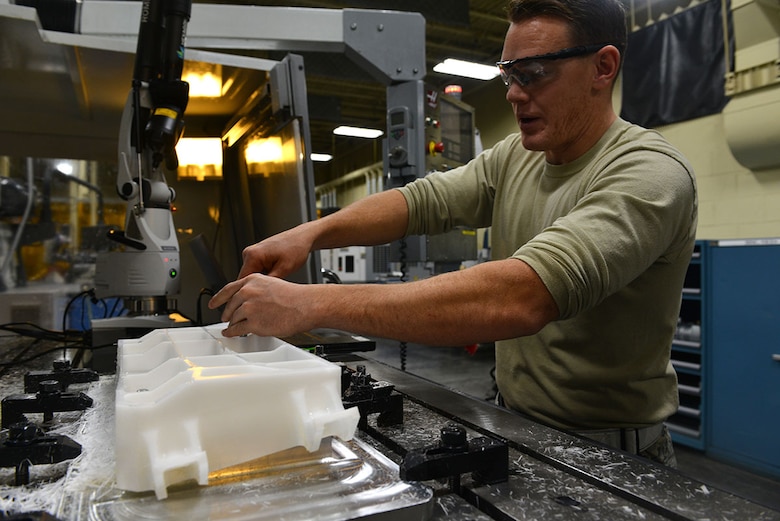 This market's major problem apart from accuracy is protection. In fact, if you try to browse online the CNC-manufactured products or CNC makers utilized in this industry, despite exactly how renowned their track record is, the supplier can not show (images of) the products that they have actually produced for their clients. They can only show items which they are made use of in. CNC Machining works well on most raw materials, this includes: Metal Sheet, Industrial Grade Plastics, and even Wood products.
This industry deals greatly with Inconel, Titanium, Kevlar, Monel as well as Hastealloy; so most CNC makers recommended in the Military sector has to have the ability to handle those.
Famous CNC standards critics in this industry consist of the Department of Protection (DOD), the Mil Specification (Armed Force Specifications) and also other selected armed forces markets.
The top managers of these industries likewise require their CNC devices to be purchased from CNC maker providers which follow the International Requirement Organization (ISO). As well as due to the fact that these industries are CNC-dependent, their shops can inhabit a large quantity of room. Primarily, that makes no space for traditional techniques as well as errors.